Circular Recycling of Industrial Polyolefin Packaging
Plastic recycling is one of the key pillars for advancing toward a more sustainable economy. In the context of industrial packaging, the recycling of polyolefins plays an important role, as these plastic materials are widely used due to their unique properties, such as high chemical resistance, low density, and strong chemical stability.
This article explores how circular recycling of polyolefins in industrial packaging helps reduce environmental impact, and how SINTAC is leading this transition through its Polyolefin (PO) solutions and commitment to the circular economy.

What Are Polyolefins and How Are They Used in Industrial Packaging?
Polyolefins are thermoplastic polymers obtained through the polymerization of olefins. They are among the most common plastics due to their high versatility and low density. The most well-known types include polyethylene (PE) and polypropylene (PP), both essential materials in industrial packaging design.
Characteristics of Polyolefins (PO)
Polyolefins possess properties that make them ideal for a wide range of industrial applications, especially in the packaging sector:
- High chemical resistance: Suitable for products requiring protection against chemicals.
- Insoluble in water: A key feature for packaging products that must remain waterproof.
- Electrical resistance: Allows use in electronic products and industrial components.
- Color versatility: Available in transparent, translucent, or solid colors depending on customer needs.
Applications of Polyolefins in Industrial Packaging
Polyolefins are widely used across industrial sectors, mainly in the manufacturing of containers and packaging for various applications, including:
- Food packaging: Such as plastic films and trays for fresh products and long-shelf-life packaging.
- Piping systems: Used for water and gas due to their durability and chemical resistance.
- Greenhouse films: Applied in agriculture to create controlled environments for crops.
- Detergent and cleaning product containers: Thanks to their chemical resistance and low permeability.
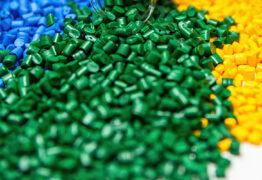
At SINTAC, we offer Polyolefin (PO) in various forms such as pellets, flakes, and bales, adapting to the specific needs of clients across different industries.
Circular Recycling of Polyolefins
Circular recycling of polyolefins is essential to closing the plastic life cycle within the packaging industry. Transitioning toward a circular economy model helps reduce plastic waste, minimize the use of virgin materials, and lower the environmental footprint associated with new packaging production.
Benefits of Circular Recycling in Polyolefin Packaging
- Waste Reduction: Circular recycling enables end-of-life polyolefin packaging to be recovered and reintegrated into the production chain, preventing it from ending up in landfills or the environment.
- Reduced Dependence on Virgin Resources: Using recycled materials in new packaging reduces the demand for virgin raw materials, supporting environmental conservation.
- Regulatory Compliance: European regulations such as the PPWR require packaging to contain higher percentages of recycled material. Polyolefin recycling helps companies meet these requirements and enhance sustainability.
Why Choose Polyolefin (PO) for Industrial Packaging?
At SINTAC, we offer Polyolefin (PO), an ideal material for industrial applications due to its unique properties and recyclability. By choosing Polyolefin (PO) for your industrial packaging, you opt for a highly durable and resistant material that also promotes recyclability and contributes to a circular economy model.
Advantages of Polyolefin (PO) for Your Business
- Sustainability: We provide solutions that close the recycling loop of polyolefins, ensuring packaging is efficiently recycled and reintegrated into the production cycle.
- Customization: We offer a wide range of colors and formats of Polyolefin (PO)—including pellets, flakes, and bales—tailored to each client’s specific needs.
- High Strength and Durability: Our Polyolefin (PO) products are engineered for excellent chemical resistance and stability, making them suitable for various industrial applications—from food packaging to piping systems.
SINTAC and Circular Polyolefin Recycling
At SINTAC, we specialize in polyolefin recycling and in implementing circular economy projects within the industrial packaging sector. Through our collaboration with RIGK, the pioneering German organization in eco-efficient plastics management, we have developed several initiatives in Spain that promote industry sustainability.
Frequently Asked Questions About Polyolefin Recycling
1. What are polyolefins and how are they used in industrial packaging?
Polyolefin (PO) is a thermoplastic material used in various industrial applications due to its chemical resistance, low density, and high chemical stability, making it ideal for manufacturing industrial packaging.
2. What are the most common applications of polyolefins in packaging?
Polyolefins are mainly used in food packaging, flexible packaging, piping, and greenhouse films, owing to their versatility and resistance.
3. How is polyolefin recycling carried out?
Polyolefins are generally recycled through mechanical processes, where plastics are cleaned, separated, and melted to produce new products. In some cases, chemical recycling is used to break down lower-quality plastics.
4. What regulations affect polyolefin recycling?
The PPWR is the main regulation governing polyolefin recycling within the European Union. It establishes rules for packaging recyclability and mandates increased use of recycled materials in new products.